


WASHINGTON (CN) - In a win for Republicans, the Supreme Court on Monday said Alabama can reinstate a congressional map found by lower courts to be an illegal racial gerrymander.
Alabama's yearslong redistricting battle has played out alongside Louisiana's. After the justices rejected the use of race to ensure minority voters had equal opportunities to participate in the electoral process in Louisiana v. Callais, Alabama told the high court that its 2023 map was lawful and should be used in upcoming elections.
"Alabama's case mirrors Louisiana's, and they should end the same way: with this year's elections run with districts based on lawful policy goals, not race," the state wrote in an emergency application.
But civil rights groups said that the court's intervention would create an emergency for Alabama's ongoing election. Alabama voters have already begun early voting under the court-ordered remedial map, which has been in place for nearly three years.
"No level of effort could prevent late-breaking judicial interference with the status quo from causing chaos and mass confusion when voting under the remedial map already commenced six weeks ago and Election Day is little more than a week away," the civil rights groups wrote.
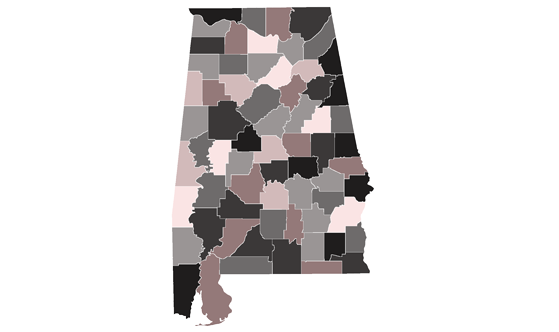
Black Alabamians make up 27% of the state's voting-age population but only represent the majority in one of seven of the state's congressional districts. Alabama lawmakers have been fighting against adding a second majority-Black district for the better part of five years.
Alabama's 2021 congressional maps split the Black Belt, breaking Montgomery into two districts for the first time. Voting rights groups challenged the maps under Section 2 of the Voting Rights Act, which prohibits voting practices that discriminate based on race.
The Supreme Court found the map unlawful in 2023, ordering lawmakers to redraw the districts to include a second Black majority district. But the Republican leadership refused to comply.
A panel held a second time that the 2023 maps did not give enough representation to Black Alabamians, enjoining their use. Alabama asked the Supreme Court to halt a court-mandated redraw of its maps, but the justices refused to do so at the time.
Last year, a federal panel held the Legislature intentionally discriminated against Black voters in its 2023 maps by deliberately enacting a plan it knew did not comply with prior court orders and Voting Rights Act standards.
The panel ordered the state to continue using a previously ordered remedial plan, and scheduled further proceedings to consider placing the state under federal preclearance guidelines that were only lifted in 2020.
Alabama says the Supreme Court's ruling in Callais vindicated its 2023 maps. But with quickly approaching primary elections, the state pushed the justices to issue an emergency order allowing the 2023 maps to be used for the 2026 election in anticipation that the lower courts will now have to rule in its favor.
Source: Courthouse News Service